

Why Your Nighttime Casein Timing Might Be Sabotaging Recovery
Casein’s slow absorption rate of 4-7 hours makes it ideal for nighttime muscle recovery, providing continuous amino acids throughout your 8-hour sleep cycle. Taking casein 30 minutes before bed prevents muscle breakdown and delivers superior results compared to fast-digesting whey protein.
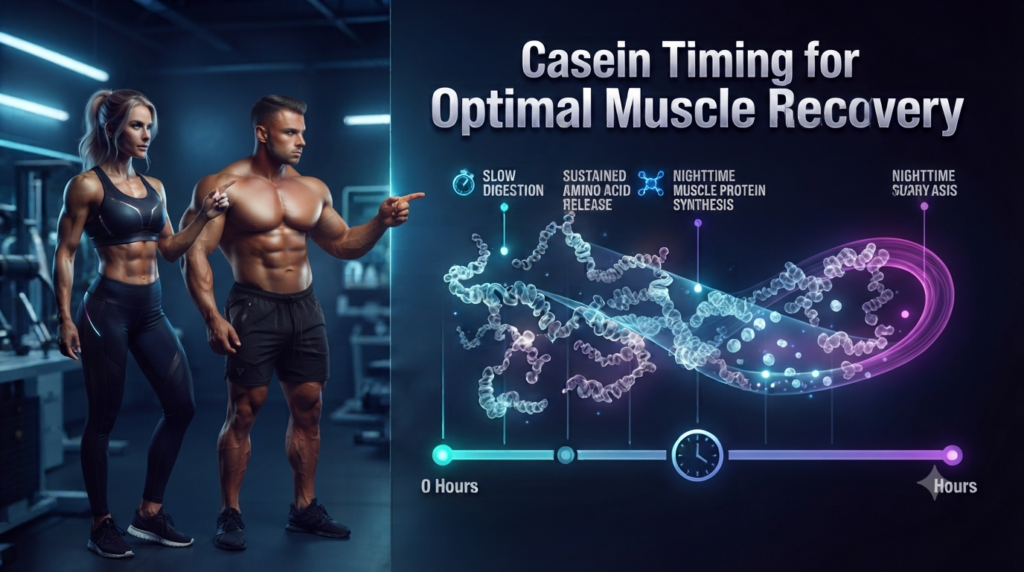
Nighttime Casein Timing for Optimal Muscle Recovery matters more than most people realize. Your muscles need amino acids during the eight hours you sleep. Without them, muscle breakdown happens. Taking casein 30 minutes before bed solves this problem completely.
Why Casein Works Differently at Night
Casein requires four to seven hours for complete absorption because it forms a gel-like substance in your stomach. This isn’t a flaw. It’s exactly what makes it perfect for sleep. Casein digests at 6 grams per hour, while whey moves through at double that speed. During an eight-hour sleep, casein provides amino acids the entire time. Whey runs out within three hours.
Your stomach acid triggers this clotting process. The acidic environment slows gastric emptying, which delays casein breakdown and flow into the blood amino acid pool. This creates the sustained release everyone talks about.
The timing mechanism matters for Nighttime Casein Timing for Optimal Muscle Recovery.
Muscle Protein Synthesis Increases During Sleep with Casein
Muscle protein synthesis rates were about 22% higher during overnight sleep when protein was consumed prior to sleep compared to placebo. This study used 40 grams. Smaller amounts don’t produce the same effect. Only the 40 gram dose raised overnight myofibrillar protein synthesis above placebo at 0.044%/h compared with 0.033%/h, while 20 gram doses did not separate from placebo.
The dosage difference is real. The discrepancy between study outcomes may be explained by the more moderate amount of protein, 30 grams versus 40 grams. If you want results, don’t skimp.
Protein ingestion prior to sleep increases both mitochondrial and myofibrillar protein synthesis rates during overnight recovery from exercise. Both types of protein synthesis matter. Myofibrillar builds muscle size. Mitochondrial improves endurance capacity.
Evening Training Amplifies Nighttime Casein Benefits
Pre-sleep protein ingestion facilitates recovery when exercise is performed in the evening, with greater effects on overnight muscle protein synthesis when exercise is performed later. Morning workouts don’t create the same advantage. Your muscles stay sensitive to amino acids for several hours after training. Evening sessions keep that window open right into your sleep period.
Pre-sleep casein protein ingestion, especially after resistance training in the evening, could have positive effects on muscle recovery. This combination works. Training in the morning means casein still helps, but you lose the amplification effect.
Nighttime Casein Timing for Optimal Muscle Recovery depends partly on when you train.
Ingesting approximately 40 grams of casein pre-sleep attenuated muscle soreness and enhanced recovery of muscle function in the 60 hours following an evening soccer match. The recovery window extends far beyond overnight. Soreness drops. Function returns faster.
Exact Timing Windows for Taking Casein Before Bed
The consumption of 20 to 40 grams of casein approximately 30 minutes before sleep stimulates whole-body protein synthesis rates over a subsequent overnight period. This pre-sleep timing window allows sufficient time for casein’s gel-like clotting mechanism to initiate gastric digestion before lying down, optimizing the sustained amino acid release throughout your sleep cycle. Research consistently validates this 30-minute pre-sleep interval. Earlier consumption risks accelerated gastric emptying from daytime activity, reducing sustained-release benefits. Later consumption may not allow adequate initial digestion before sleep onset. The most effective administration window for pre-sleep casein protein supplementation is 30 to 60 minutes before bed, balancing sufficient preparation time with optimal sleep-phase absorption.
Some people take it right at bedtime. Others prefer 60 minutes before. Both work. The key is giving your stomach enough time to start the clotting process before you lie down. Too early and digestion speeds up from movement. Too late and you’re asleep before absorption begins properly.
Don’t overthink this part of Nighttime Casein Timing for Optimal Muscle Recovery. Anywhere in that 30 to 60 minute range works.
Casein Works for Older Adults Too
Ingesting 40 grams of casein before sleep increases overnight myofibrillar protein synthesis rates in healthy older men, with rates of 0.044%/h compared with 0.033%/h for placebo. The study used men averaging 72 years old. Muscle protein synthesis becomes harder with age. Casein helps overcome this.
The protein was digested and absorbed across the night, delivering amino acids that were incorporated into myofibrillar protein during sleep. Older digestive systems handle casein fine. The slow release actually helps when overall protein intake drops from reduced appetite.
Age doesn’t eliminate the value of Nighttime Casein Timing for Optimal Muscle Recovery. It increases it.
Long-Term Training Results From Nightly Casein
12 weeks of pre-sleep casein supplementation at 27.5 grams protein combined with resistance training resulted in greater strength and muscle mass gains compared to placebo, with no increase in body fat. This wasn’t a single-night study. Consistent nightly use over three months produced measurable size and strength differences.
Nighttime consumption of 35 grams casein was as effective as daytime casein intake at increasing strength and muscle building in response to a 10-week resistance training program. The timing doesn’t hurt results. It matches them. But overnight provides the longest fasting period, making casein particularly useful then.
30 to 40 grams of casein protein before sleep increases overnight muscle protein synthesis and metabolic rate, two key factors in muscle recovery and growth. The metabolic rate increase is underappreciated. Your body burns more calories processing protein. This happens during sleep.
What Happens When You Skip Nighttime Protein
During fasting like sleep, muscle protein breakdown can outpace muscle protein synthesis, but casein minimizes this breakdown by providing raw materials for repair. Without protein, your body still needs amino acids. It takes them from muscle tissue. Eight hours of this adds up over weeks.
Your overnight fast is the longest you go without eating. During this window, muscle protein breakdown continues while muscle protein synthesis slows due to falling amino acid levels. The gap widens as the night goes on. By morning, you’re deeply catabolic.
Skipping Nighttime Casein Timing for Optimal Muscle Recovery wastes the longest recovery period of your day.
Whole Food Sources Versus Casein Powder
Cottage cheese provides casein naturally. One cup contains about 24 grams of protein. Incorporating casein protein via cottage cheese into your nighttime routine can support muscle repair, and cottage cheese stands out as a versatile, nutrient-packed way to get it. Greek yogurt works too, though it has less casein per serving.
Powders give you precise dosing. Forty grams is forty grams. Food requires calculation. Two cups of cottage cheese gets you close. The food version comes with extra nutrients. The powder version comes with convenience.
Both support Nighttime Casein Timing for Optimal Muscle Recovery. Pick the one you’ll actually use consistently.
Frequently Asked Questions
How much casein should I take before bed?
Take 40 grams of casein for best results. Research shows smaller doses like 20 grams don’t increase muscle protein synthesis above placebo. Older adults and hard trainers benefit most from the full 40 gram dose.
Can I take casein if I train in the morning?
Yes, but the effect is smaller. Evening training amplifies overnight protein synthesis when combined with pre-sleep casein. Morning workouts mean you still benefit from overnight amino acids, just without the exercise amplification.
Does casein affect sleep quality negatively?
No, casein doesn’t harm sleep quality. Research subjects reported increased total sleep time and sleep efficiency, as well as decreased sleep latency. Some people experience improved sleep from stable blood sugar overnight.
Is whey protein before bed just as good?
The overnight muscle protein synthetic response to whey and casein protein does not differ. However, casein’s slow digestion matches your sleep duration better. Whey absorbs within two hours, leaving six hours uncovered.
Will nighttime casein make me gain fat?
No if total daily calories stay controlled. Pre-sleep casein supplementation resulted in greater muscle mass gains with no increase in body fat. Count the casein calories in your daily total to avoid accidental surplus.
Mix 40 grams of casein powder with water 30 minutes before your next sleep tonight.