
The Pre-Workout Meal Timing Most Lifters Get Wrong
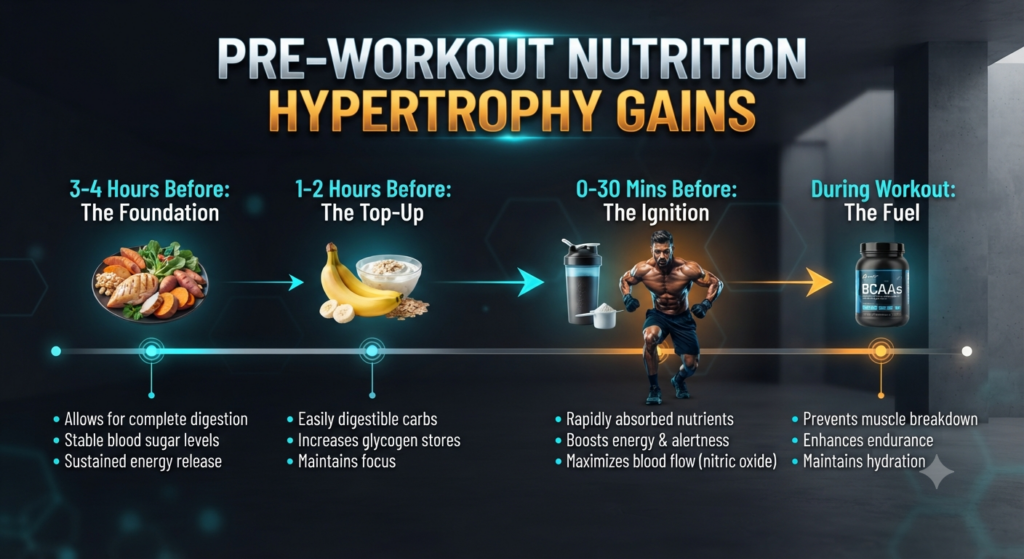
Your body needs 3-4 hours to digest a full meal, breaking protein into amino acids and carbs into glucose for peak performance. Training fasted limits your glycogen stores and reduces how hard you can push, directly impacting your hypertrophy gains.
You finish your workout and wonder if you should have eaten sooner. Muscle growth starts before you even pick up a weight. Pre Workout Nutrition Timing for Hypertrophy Gains determines how much size you actually build. The gap between your meal and your first set matters more than most lifters realize.
Pre Workout Nutrition Timing for Hypertrophy Gains: The Science of Meal Spacing
Your body needs three to four hours to digest a full meal. Protein breaks down into amino acids during this window. Carbohydrates convert to glucose and enter your bloodstream. Fat slows everything down but provides sustained energy later in your session.
Training on a completely empty stomach limits your performance. Your muscles run out of glycogen faster. You can’t push as hard on your final sets. Lower training volume means less muscle damage to repair and grow from.
Eating too close to training creates different problems. Blood flows to your stomach instead of your muscles. You feel sluggish and heavy. Some people experience nausea during intense compound movements like squats.
The sweet spot sits between one and three hours before training. This timing gives your body enough time to process nutrients. Your blood sugar stays elevated throughout your workout. Amino acids circulate and prevent muscle breakdown during hard sets.
What You Should Eat Before Training for Maximum Muscle Growth
Protein intake before training primes your muscles for growth. Your body needs twenty to forty grams of protein. Whey digests faster than chicken or beef. Whole food sources work fine if you time them correctly.
Carbohydrates fuel high-intensity training sessions. You need forty to eighty grams depending on body size. White rice digests faster than brown rice. Sweet potatoes provide steady energy without stomach discomfort.
Fat slows digestion but isn’t your enemy. A small amount helps with hormone production. Keep it under fifteen grams in your pre-workout meal. Too much fat delays nutrient absorption when you need it most.
Real example: one chicken breast with one cup of white rice works well. Add a small amount of vegetables for micronutrients. This combination digests in about two hours for most people.
Liquid meals digest faster than solid food. A protein shake with a banana takes sixty to ninety minutes. This option suits early morning trainers who can’t eat solid food. The tradeoff is less satiety during your workout.
Pre Workout Nutrition Timing for Hypertrophy Gains Across Different Training Windows
Morning trainers face unique challenges with nutrient timing. You wake up after eight hours without food. Your glycogen stores sit lower than any other time of day. Eating immediately after waking doesn’t solve this problem.
Your digestive system needs time to wake up too. Forcing down a large meal causes discomfort. A better approach involves eating a smaller meal ninety minutes before training. Focus on fast-digesting proteins and simple carbohydrates.
Afternoon and evening sessions allow more strategic timing. You’ve already eaten multiple meals throughout the day. Your glycogen stores remain fuller from breakfast and lunch. You can train two to three hours after lunch without issues.
Late night trainers should adjust their dinner timing. Eating your main meal right after training works better. Have a moderate snack two hours before your evening session instead. This prevents going to bed on an overly full stomach.
How Pre Workout Nutrition Timing for Hypertrophy Gains Changes with Meal Size
Large meals require longer digestion periods. A meal with sixty grams of protein needs three to four hours. Your stomach works harder to break down more food. Training too soon after big meals reduces performance.
Smaller meals digest in ninety minutes to two hours. This allows more flexibility in your schedule. You can eat closer to training without feeling heavy. The downside is potentially running out of energy mid-workout.
Meal frequency throughout the day affects your pre-workout needs. Eating four to five meals daily keeps nutrients flowing constantly. Your last meal before training doesn’t carry as much pressure. Missing optimal timing matters less when you’re consistently fed.
Two to three larger meals daily creates different demands. Each meal becomes more critical for performance. Your pre-workout meal needs precise timing. Being off by an hour impacts your training quality noticeably.
Body size plays a role in digestion speed. Larger athletes process food differently than smaller ones. A 200-pound lifter needs more time than a 150-pound lifter. Experiment with timing based on your own digestive response.
Pre Workout Nutrition Timing for Hypertrophy Gains: Adjusting for Training Intensity
Heavy compound movements demand more from your digestive system. Squats and deadlifts create intra-abdominal pressure. Eating too close to these sessions causes serious discomfort. Allow at least two and a half hours before heavy leg days.
Upper body sessions tolerate closer meal timing. Bench press and rows don’t stress your stomach as much. You can train ninety minutes after eating without problems. This flexibility helps when your schedule gets tight.
High-volume training burns through glycogen faster. Sessions with fifteen to twenty sets per muscle group need more fuel. Eating a larger pre-workout meal becomes necessary. Plan for three hours of digestion before these demanding workouts.
Lower volume strength work requires less immediate energy. Five sets of five reps doesn’t deplete glycogen stores. A smaller pre-workout meal works fine. You might even train fasted without major performance drops.
Conditioning work at the end of training changes nutrient needs. Adding twenty minutes of cardio after lifting extends your session. Your pre-workout meal needs to fuel this extra work. Increase carbohydrate intake by fifteen to twenty grams.
Common Mistakes That Sabotage Pre Workout Nutrition Timing for Hypertrophy Gains
Drinking a protein shake five minutes before training wastes nutrients and ignores digestion kinetics. Your body can’t absorb and deliver amino acids to muscle tissue that quickly during the anabolic window. The protein remains in your gastric system unused during your workout, contributing to bloating rather than providing the sustained amino acid availability needed for muscle protein synthesis. Liquid meals still require 60-90 minutes minimum for meaningful nutrient absorption and bloodstream delivery, even with their faster digestion rate compared to solid foods.
Training completely fasted to burn more fat backfires for muscle growth. Yes, you might oxidize more fat during the session. But you sacrifice training intensity and volume. Less work means less stimulus for hypertrophy.
Copying someone else’s timing without adjustment causes problems. Your training partner might digest food faster than you. Their meal timing could make you feel sick. Test different windows and find your personal sweet spot.
Ignoring fiber content in pre-workout meals slows digestion significantly. A meal with ten grams of fiber takes much longer to process. Choose lower-fiber carbohydrate sources before training. Save vegetables and whole grains for post-workout meals.
Changing your pre-workout meal constantly prevents adaptation. Your body adapts to regular eating patterns. Switching foods weekly disrupts this process. Find a meal that works and repeat it consistently.
Testing and Tracking Your Personal Pre Workout Nutrition Timing for Hypertrophy Gains
Keep a simple training log with meal timing notes. Write down when you ate before each session. Rate your energy and performance on a scale of one to ten. Patterns emerge after two to three weeks.
Notice when you feel strongest during your workout. Does energy peak in the first half or second half? Early fatigue suggests you needed more time or more carbohydrates. Finishing strong means your timing worked well.
Track digestive comfort separately from performance. You might feel energized but also bloated. This indicates good nutrient timing but poor food choices. Adjust what you eat while keeping timing the same.
Test one variable at a time over multiple sessions. Change meal timing but keep food choices identical. This isolates the impact of timing alone. Changing everything at once makes results impossible to interpret.
Most lifters find their optimal window within four to six weeks. You’ll notice clear differences between good and bad timing. Once you identify your range, stick with it. Consistency builds better results than constant experimentation.
Frequently Asked Questions
What happens if I eat too close to training?
Your body diverts blood flow to your digestive system instead of muscles. This reduces your strength and endurance during training. You may also experience stomach cramps or nausea during intense exercises.
Can I build muscle training completely fasted?
Fasted training limits your workout intensity and total volume. Lower performance means less muscle stimulus over time. You can maintain muscle but growing new tissue becomes much harder.
How much protein should I eat before training?
Aim for twenty to forty grams of protein before your workout. This amount provides enough amino acids without overloading your digestion. Larger athletes should target the higher end of this range.
Does pre-workout meal timing matter more than post-workout nutrition?
Both matter but pre-workout timing affects your actual training performance. Better performance creates more muscle damage to repair. Post-workout nutrition supports recovery but can’t compensate for poor training quality.
Should I adjust timing on rest days?
Rest days don’t require specific meal timing for performance. Focus on total daily protein and calorie intake instead. Eating every three to four hours maintains steady nutrient delivery for recovery.
Start by eating a moderate meal two hours before your next workout and track how you feel throughout the session.