

Why Your Lean Bulk Fails Before Spring 2026
The Macro Split Blueprint for 2026 Lean Bulking Diets prioritizes protein distribution over total calories to build muscle while minimizing fat gain. A 180-pound lifter needs 198 grams of protein daily—not the outdated 144 grams—to prevent excess carbs from storing as fat.
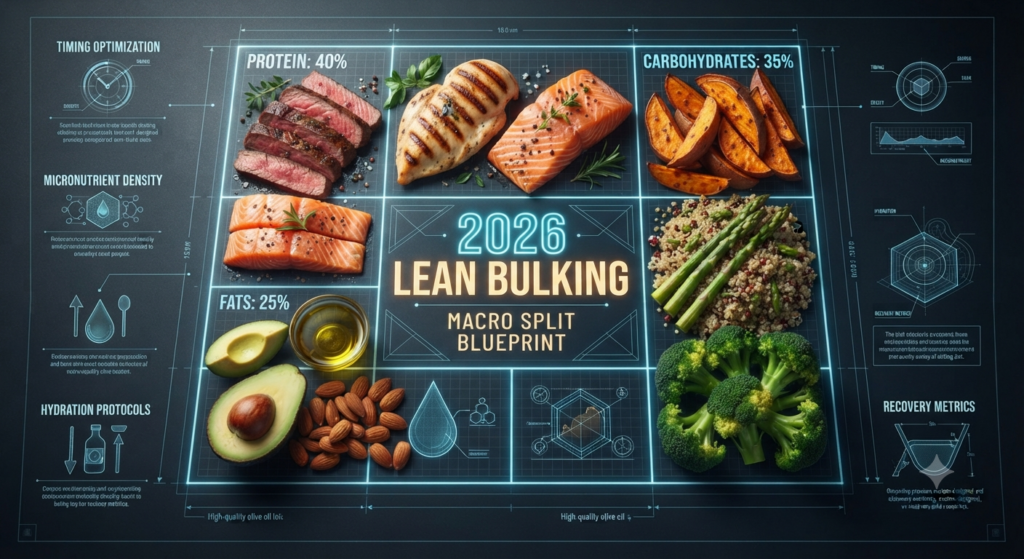
You eat clean for six weeks and step on the scale. The number climbs, but your abs vanish under a layer of fat. The Macro Split Blueprint for 2026 Lean Bulking Diets fixes this by prioritizing protein distribution over total calories alone.
Why the Macro Split Blueprint for 2026 Lean Bulking Diets Changes Everything
Most bulking plans add 500 calories and hope muscle appears. This creates fat gain faster than muscle growth. The ratio matters more than the total number on your tracking app.
Protein needs jump to 1.1 grams per pound of body weight during a lean bulk. A 180-pound lifter needs 198 grams daily, not the outdated 144 grams from old recommendations. This higher intake stops your body from storing excess carbs as fat.
Carbs fuel your heaviest sets in the gym. Fats regulate hormones that build muscle tissue. The Macro Split Blueprint for 2026 Lean Bulking Diets sets protein first, carbs second based on training volume, and fats last to fill remaining calories.
The split looks like this: 30% protein, 45% carbs, 25% fats. A 3000-calorie plan breaks down to 225 grams protein, 338 grams carbs, and 83 grams fat. These percentages prevent the common mistake of overloading carbs while protein stays too low.
Calculating Your Personal Starting Point
Your maintenance calories determine where the bulk begins. Track your current intake for one week without changing habits. Add up the daily totals and divide by seven.
Add 250 calories to that average. This creates a surplus small enough to minimize fat storage. A 2500-calorie maintenance becomes 2750 for lean bulking.
Multiply your body weight by 1.1 to find protein grams. Convert that to calories by multiplying grams by four. A 170-pound person needs 187 grams, which equals 748 calories from protein.
Set fats at 0.45 grams per pound of body weight. The same 170-pound person needs 77 grams of fat daily. Multiply by nine calories per gram to get 693 fat calories.
Subtract protein and fat calories from your total. The remainder becomes your carb budget. With 2750 total calories, minus 748 protein and 693 fat, you get 1309 carb calories. Divide by four to find 327 grams of carbs.
Timing Windows That Amplify the Macro Split Blueprint for 2026 Lean Bulking Diets
Eating 40% of daily carbs within two hours after training maximizes glycogen storage. Your muscles act like sponges post-workout. They pull nutrients from blood into tissue faster than any other time.
Save 30 grams of protein for the meal immediately following your last set. This portion kickstarts repair before you leave the gym parking lot. The remaining protein spreads across four meals throughout the day.
Fats belong away from the workout window. They slow digestion when you need fast nutrient delivery. Place most fat intake at breakfast and your final meal before bed.
Pre-workout meals need carbs but minimal fat. Consume 60 grams of carbs 90 minutes before lifting. Pair with 25 grams of protein and under 8 grams of fat.
Overnight fasting creates a catabolic state where muscle breaks down. A casein shake before bed provides slow-release protein for eight hours. Mix 40 grams of casein with water, not milk, to avoid extra carbs.
Adjusting the Macro Split Blueprint for 2026 Lean Bulking Diets by Training Frequency
Four training days per week demands different carb distribution than six days. Higher frequency needs more total carbs to support recovery. Drop rest day carbs by 25% and add those grams to training days.
A person eating 350 grams on training days cuts to 263 grams on rest days. This approach prevents spillover storage as body fat. Your muscles only store limited glycogen based on recent depletion.
Protein stays constant every single day. Muscle repair happens around the clock, not just after workouts. Dropping protein on off days wastes potential growth during recovery periods.
Fat intake can rise slightly on rest days to compensate for lower carbs. Add 15 grams of healthy fats from sources like avocado or almonds. This keeps total calories stable while matching fuel to activity.
Two-a-day training splits require a third carb-heavy meal between sessions. Front-load 80 grams after the morning workout. Add another 80 grams before the evening session starts.
Food Sources That Match Macro Split Blueprint for 2026 Lean Bulking Diets Ratios
Chicken breast delivers 31 grams of protein per 100 grams with almost zero fat. This makes hitting protein targets simple without accidentally overshooting fat limits. Season with zero-calorie spices instead of oil-based marinades.
White rice provides pure carbs at 28 grams per 100 grams cooked. It digests faster than brown rice, making it better for post-workout meals. Save fiber-rich options like oats for breakfast when digestion speed doesn’t matter.
Egg whites give you 11 grams of protein per half cup with zero fat. Whole eggs add unnecessary fats during a lean bulk unless you’re significantly under your fat target. Use whole eggs only at breakfast when fat intake helps hormone production.
Sweet potatoes offer 20 grams of carbs per 100 grams plus beneficial micronutrients. They rank lower on the glycemic index than white potatoes. This steadier energy release works better for meals three hours before training.
Greek yogurt hits 10 grams of protein per 100 grams. Choose 0% fat versions to control fat macros precisely. Add your own fruit instead of buying pre-mixed varieties loaded with added sugars.
Tracking Compliance Without Obsessing Over Every Gram
Weigh foods raw before cooking. Meat loses water weight during cooking, which throws off calculations. A 200-gram raw chicken breast might weigh 140 grams cooked but contains the same macros.
Measure oils and nut butters with measuring spoons, not eyeballing. One tablespoon of olive oil contains 14 grams of fat. Pouring freely adds 50 extra grams before you notice.
Pre-log tomorrow’s meals tonight. This removes decision fatigue when hunger hits. You already know what fits your numbers before opening the fridge.
Allow a 5% margin on each macro. Stressing over 8 grams of carbs wastes mental energy. Hit within 15 grams of your carb target and move on with your day.
Take diet breaks every eight weeks. Eat at maintenance for one week to reset metabolic adaptation. Your body downregulates calorie burn during prolonged surpluses, slowing muscle growth over time.
When the Scale Stalls Using Macro Split Blueprint for 2026 Lean Bulking Diets
No weight gain for two weeks means you’re at maintenance, not surplus. Add 150 calories through carbs only. Protein and fat ratios already support muscle growth at current levels.
Gaining more than one pound per week signals excess fat accumulation. Cut 200 calories by reducing carbs on rest days first. Training day carbs fuel performance, so protect those amounts longer.
Measure waist circumference every Monday morning. An increase over 0.5 inches in two weeks indicates too much fat gain. Scale weight alone lies because muscle and fat weigh the same per pound.
Progress photos reveal what the mirror hides during daily checks. Take front, side, and back shots in the same lighting every two weeks. Compare month-to-month, not week-to-week, to see real changes.
Strength progression confirms muscle growth better than any scale. Track total volume lifted per session. If your bench press jumps from 8000 pounds total volume to 9200 pounds across all sets, you built tissue regardless of waist size.
Common Mistakes That Sabotage Your Results
Drinking calories from juice or sports drinks spikes insulin without filling your stomach, causing rapid blood sugar fluctuations and blunted satiety signals. This leaves room for overeating solid foods later and disrupts the steady energy needed for training performance. Liquid calories also bypass the thermic effect of food (TEF), meaning your body burns fewer calories digesting beverages compared to whole foods. Stick to water, black coffee, and unsweetened tea between meals to preserve your caloric deficit while maintaining stable energy levels throughout the day.
Skipping vegetables because they don’t fit macros perfectly creates micronutrient gaps. Spinach and broccoli contain negligible calories but provide vitamins that support muscle function. Eat 200 grams of greens daily without logging them.
Copying a friend’s split ignores your unique body weight and activity level. A 150-pound desk worker needs different carbs than a 200-pound construction worker. Calculate your own numbers from scratch.
Cheat meals that exceed 1000 extra calories erase three days of careful surplus. Plan a single meal at 300 calories over target instead. This satisfies cravings without destroying weekly averages.
Ignoring sleep sabotages every macro ratio you hit perfectly. Seven hours minimum allows growth hormone release and cortisol management. Poor sleep increases fat storage even with flawless nutrition.
Frequently Asked Questions
How long should I follow the Macro Split Blueprint for 2026 Lean Bulking Diets?
Run the plan for 12 to 16 weeks before switching to maintenance. Longer bulks increase fat gain regardless of macro precision. Take a four-week break at maintenance calories before starting another bulk phase.
Can I build muscle with lower protein than 1.1 grams per pound?
Muscle growth occurs at 0.8 grams per pound minimum. Higher amounts during a surplus prevent carb conversion to fat. The extra protein also increases calorie burn through digestion.
Should I change macros on rest days versus training days?
Lower carbs by 25% on rest days to match reduced activity. Keep protein and fats identical every day. This approach prevents unnecessary fat storage while supporting recovery.
What happens if I miss my macro targets one day?
One day off plan has zero impact on 12-week results. Return to your numbers the next morning without compensating. Trying to make up yesterday’s deficit usually causes overeating.
How do I know if I’m gaining muscle or just fat?
Measure strength increases and waist circumference together. Gaining weight while lifting heavier with stable waist size indicates muscle. Scale increases with waist growth beyond 0.5 inches monthly signals excess fat.
Start tracking your first week tomorrow using the ratios above and adjust based on scale changes every 14 days.