
Why Your Gym Nutrition Advice Is Costing You Gains
Bro Science vs Science separates proven nutrition methods from gym myths that waste your time and effort. Learn why protein timing matters less than total daily intake for building muscle naturally.
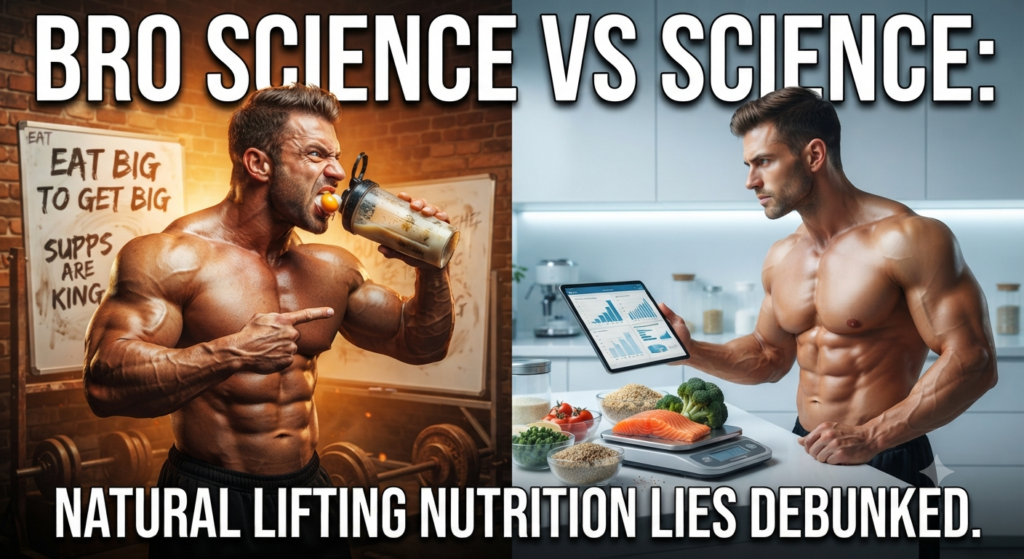
You hear the same nutrition advice in every gym locker room. Most of it sounds convincing but fails in practice. Bro Science vs Science: Natural Lifting Nutrition Lies separates proven methods from myths that waste your time.
The Protein Timing Window Myth in Bro Science vs Science: Natural Lifting Nutrition Lies
Gym culture insists you need protein within 30 minutes after training. Missing this window supposedly kills your gains. People sprint to the locker room clutching shaker bottles.
Research shows a different story. Your muscles stay ready to absorb protein for at least 24 hours after training. The total protein you eat daily matters far more than timing. A 2013 study tracked two groups eating identical protein amounts at different times. Both groups built muscle at the same rate.
The panic about immediate post-workout nutrition comes from old studies on fasted athletes. These studies used people who hadn’t eaten for hours before training. Your body responds differently when you eat regular meals throughout the day.
Most lifters eat within a few hours of training anyway. This natural pattern covers any minor timing benefits that exist. Stressing about the exact minute you drink your shake wastes mental energy. Focus on hitting your daily protein target instead.
Why Meal Frequency Dogma Fails Natural Lifters
Bodybuilding magazines push six to eight small meals per day. This supposedly keeps your metabolism firing and preserves muscle. Eating every two hours becomes a second job.
Your metabolism doesn’t work this way. Eating more frequently doesn’t increase total calories burned in a day. Studies comparing three meals to six meals show identical fat loss results. The thermic effect of food stays the same regardless of meal frequency.
Constant eating actually makes dieting harder for most people. You never feel satisfied after small meals. Hunger returns before your next scheduled feeding. Many lifters find three or four larger meals more sustainable.
Some people do better eating often. Others prefer fewer bigger meals. Your personal schedule and hunger patterns matter more than following a rigid meal plan. The best meal frequency is the one you can maintain consistently.
Carbs After Dark and Other Bro Science vs Science: Natural Lifting Nutrition Lies
Popular fitness advice says carbs eaten at night turn directly into body fat. People cut off carb intake after 6 PM religiously. They eat plain chicken and broccoli for dinner while craving bread.
Your body doesn’t have a carb curfew. Fat storage depends on total daily calories, not meal timing. A 2011 study had one group eat most carbs at dinner. The control group ate carbs throughout the day. The evening carb group actually lost more body fat.
Carbs at night might help you sleep better. They increase serotonin production in your brain. Better sleep supports muscle recovery and hormonal balance. These benefits outweigh imaginary fat storage risks.
The real problem is overeating late at night out of boredom. Mindless snacking while watching TV adds extra calories you don’t need. Eating planned carbs with dinner prevents this better than strict evening restrictions.
The Clean Eating Trap in Bro Science vs Science: Natural Lifting Nutrition Lies
Fitness culture divides foods into clean and dirty categories. Clean foods supposedly build muscle while dirty foods make you fat. This creates unnecessary food anxiety and social isolation.
Your body processes nutrients the same way regardless of food source. Protein from chicken works identically to protein from a burger. The vitamins in brown rice don’t differ from white rice vitamins chemically. Your muscles can’t tell if calories came from organic quinoa or regular pasta.
Focusing only on clean foods often leads to nutritional gaps. Many people avoid dairy, grains, and processed foods simultaneously. This severely limits food variety and makes getting enough calories difficult. Natural lifters need substantial energy to build muscle.
Food quality matters for overall health and satiety. Whole foods provide more nutrients and keep you fuller longer. But treating ice cream like poison creates disordered eating patterns. A diet that’s 80 percent whole foods with room for treats works better long term.
Why the Anabolic Window Closes Slower Than You Think
Bro science claims your body enters a catabolic state within hours of training. Missing meals supposedly causes immediate muscle loss. This drives people to eat protein every three hours religiously.
Muscle breakdown happens much slower than gym mythology suggests. Your body prioritizes preserving muscle tissue during short fasting periods. You’d need to skip meals for over 24 hours before serious muscle loss begins. Even then, your body burns fat preferentially at first.
The concept of going catabolic ignores how protein digestion actually works. A large meal takes six to eight hours to fully digest and absorb. Amino acids from lunch are still entering your bloodstream at dinner time. Your body maintains a steady supply between normal meals.
Worrying about catabolism leads to forced eating when you’re not hungry. This adds unnecessary calories that become body fat. Trust your natural hunger signals more. They evolved to prevent actual starvation, not imaginary muscle loss.
Fat Intake Fears in Bro Science vs Science: Natural Lifting Nutrition Lies
Old-school bodybuilding advice treats dietary fat as the enemy. People eat chicken breast and egg whites exclusively. They believe eating fat directly becomes body fat.
Dietary fat doesn’t automatically convert to stored fat. Your body stores excess calories as fat regardless of their source. Overeating protein or carbs causes fat gain just as easily. Total calorie balance determines whether you gain or lose weight.
Fat serves critical functions for natural lifters. It supports testosterone production and hormone balance. Low-fat diets often tank testosterone levels in men. One study showed testosterone dropped 12 percent when fat intake fell below 20 percent of calories.
Fat also helps you absorb vitamins A, D, E, and K. These nutrients need fat present for proper absorption. Extremely low-fat diets can create deficiencies even when eating vitamin-rich foods. Aim for 25 to 35 percent of calories from fat sources.
Supplement Dependency and Marketing Versus Reality
The fitness industry sells the idea that supplements build muscle. Ads show massive athletes crediting their success to specific powder formulas. Beginners think they can’t progress without a full supplement stack.
Most supplements provide minimal benefit for natural lifters. Protein powder is just convenient food, not a muscle-building drug. Creatine works but adds maybe 5 percent to your results. Pre-workout gives you caffeine you could get from coffee.
Supplement companies exploit gaps in your nutritional knowledge through deceptive marketing tactics. They use scientific-sounding ingredient names, proprietary blends that hide actual dosages, and cherry-picked studies showing isolated benefits. The fine print reveals most formulas contain subtherapeutic doses below clinically effective levels or use inferior ingredient forms. Marketing claims about bioavailability, absorption rates, and synergistic effects often lack peer-reviewed evidence. Third-party testing frequently uncovers underdosed products that don’t match label claims, wasting your money on ineffective supplement stacks when whole food nutrition provides superior results.
Your money goes further on quality food than supplement bottles. An extra pound of chicken provides more usable protein than most supplements. Spend on whole foods first. Add basic creatine and vitamin D if your budget allows. Skip everything else.
Recovery Nutrition Myths Keeping You Smaller
Popular advice says you need fast-digesting carbs immediately after training. This supposedly refills glycogen stores and prevents muscle breakdown. People gulp down sugary drinks in the gym parking lot.
Glycogen replenishment happens gradually over 24 hours regardless of carb speed. Your next regular meal handles recovery just fine. Rushing sugar into your system provides no advantage unless you’re training again within eight hours.
Most natural lifters train each muscle group once or twice weekly. You have multiple days for full glycogen restoration between sessions. The urgency around post-workout carbs applies more to athletes training twice daily. That’s not your situation.
High-sugar recovery drinks add empty calories many people don’t need. A regular meal with protein and carbs two hours post-workout works identically. Save money and stop choking down chalky shakes you don’t enjoy. Real food tastes better and satisfies you longer.
Frequently Asked Questions
Do I need to eat every three hours to maintain muscle mass?
No, eating every three hours provides no muscle-preserving advantage over normal meal patterns. Your body digests protein slowly and maintains amino acid levels between regular meals. Three to four meals daily works perfectly fine for natural lifters.
Does eating carbs at night make me gain fat faster?
No, carb timing doesn’t affect fat storage when total daily calories stay controlled. Your body stores excess calories as fat regardless of when you eat them. Some research suggests evening carbs may actually improve fat loss and sleep quality.
How much protein do I actually need as a natural lifter?
Natural lifters need roughly 0.7 to 1 gram per pound of body weight daily. More protein beyond this range provides no additional muscle-building benefit. Hitting this target consistently matters more than exact timing or specific food sources.
Are dirty bulks effective for building muscle naturally?
Dirty bulks create excessive fat gain that you’ll struggle to lose later. Natural lifters build muscle slowly compared to enhanced athletes. Eating in a moderate surplus of 300 to 500 calories daily maximizes muscle while minimizing fat.
Should I avoid all processed foods to build muscle effectively?
No, processed foods aren’t inherently muscle-destroying when eaten within your calorie and protein targets. Whole foods should form most of your diet for health and satiety. Including some processed foods makes your diet more sustainable long term.
Track your total daily protein and calories instead of obsessing over meal timing and food purity.