
Why Your Clean Bulk Is Shrinking Muscle, Not Building It
Clean bulking nutrition myths are preventing lifters from achieving their size goals despite perfect training adherence. The anabolic window myth is just one misconception—your body remains primed for muscle growth 24-48 hours post-workout, making total daily protein intake far more important than timing.
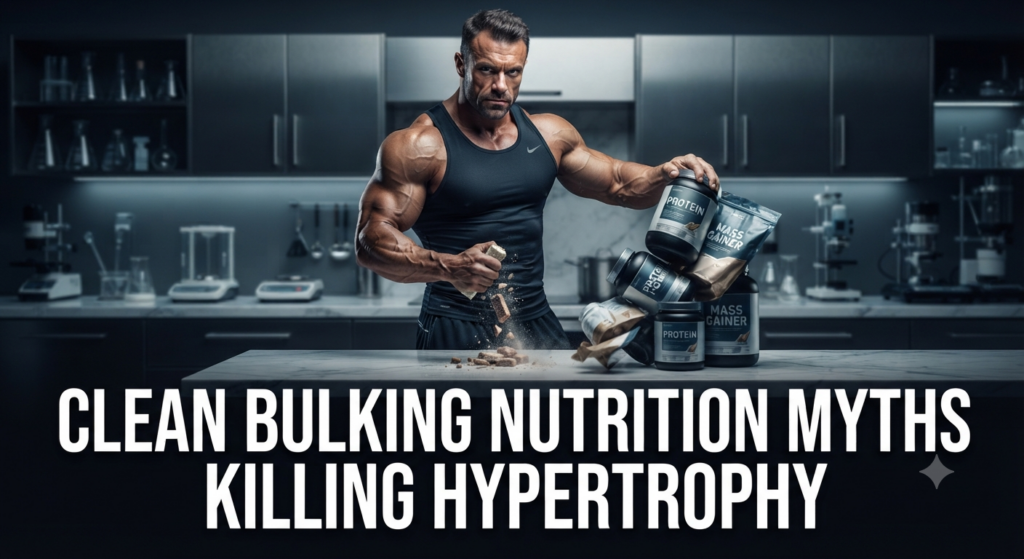
Clean Bulking Nutrition Myths Killing Hypertrophy stop lifters from reaching their size goals every single day. You follow the rules perfectly but your gains stall anyway. The mirror shows minimal change despite months of effort. The problem isn’t your training volume or your genetics.
The Protein Timing Window Clean Bulking Nutrition Myth Killing Hypertrophy
You rush home after training to down a shake within thirty minutes. This frantic behavior stems from outdated research about anabolic windows. The truth is your muscles stay primed for growth for hours.
Studies show protein synthesis remains elevated for twenty-four to forty-eight hours post-workout. Your body doesn’t suddenly shut down muscle building at the thirty-one minute mark. Total daily protein intake matters far more than exact timing.
Missing your post-workout shake won’t destroy your progress. Eating protein within two hours helps recovery but missing this window isn’t catastrophic. Some researchers found no difference between immediate and delayed protein intake for muscle growth.
This myth creates unnecessary stress around meal scheduling. You skip social events to eat on time. You panic when meetings run late and delay your feeding window.
Focus on hitting your daily protein target instead. Spread intake across four meals for best results. Your body uses protein more efficiently when you distribute consumption evenly.
Carbs After Six Will Ruin Your Clean Bulk
Many lifters avoid carbohydrates in evening meals fearing fat gain. They believe nighttime carbs get stored as body fat automatically. This ignores how your metabolism actually works.
Your body doesn’t switch to fat-storage mode when the sun sets. Total daily calories determine whether you gain fat or muscle. Meal timing plays a minimal role in body composition changes.
Research shows no difference in fat loss between early and late carb consumption. One study had participants eat eighty percent of carbs after eight PM. They lost more body fat than the daytime carb group.
Evening carbs might actually help your gains. Carbohydrates eaten before bed improve sleep quality in some people. Better sleep means better recovery and more muscle growth.
Your training schedule should dictate carb timing. Train in the evening? Eat carbs at dinner for recovery. Train in the morning? Front-load your carb intake earlier.
Clean Foods Build More Muscle Than Processed Options
You believe chicken and rice build muscle better than protein bars or shakes. This Clean Bulking Nutrition Myths Killing Hypertrophy mindset limits your food choices unnecessarily. Your muscles can’t tell where nutrients came from.
Protein from whey powder builds muscle just as effectively as steak. Studies comparing whole food protein to supplement protein show identical muscle growth. The amino acid profile matters more than the source.
Some processed foods actually help bulking efforts. Mass gainers provide easy calories when whole foods feel too filling. Protein bars offer convenience when cooking isn’t possible.
Micronutrients do matter for health and performance. You still need vegetables and fruits in your diet. But obsessing over food purity won’t accelerate muscle gains.
The cleanest bulk in the world fails if you undereat total calories. A dirty burger that helps you hit calorie targets beats undereating clean foods. Meeting your macros trumps food quality for hypertrophy.
Fat Intake Below Twenty Percent Maximizes Lean Gains
Some lifters slash dietary fat to squeeze in more protein and carbs. They think minimal fat intake prevents fat storage during a bulk. This approach backfires in multiple ways.
Testosterone production depends on adequate fat consumption. Studies show fat intake below twenty percent of calories reduces testosterone levels. Lower testosterone means slower muscle growth and recovery.
Your body needs fat for vitamin absorption. Vitamins A, D, E, and K require dietary fat for uptake. These vitamins support immune function, bone health, and muscle repair.
Very low fat diets tank your energy levels. Fat provides sustained fuel for daily activities and training. You feel sluggish in the gym when fat intake drops too low.
Aim for twenty-five to thirty-five percent of calories from fat. This range supports hormone production without crowding out other macros. Focus on sources like olive oil, nuts, and fatty fish.
More Protein Always Equals More Muscle Growth
You consume three hundred grams of protein daily thinking more is better. This Clean Bulking Nutrition Myths Killing Hypertrophy approach wastes money and digestive comfort. Research shows diminishing returns above certain protein levels.
Most studies find optimal protein intake around 0.8 grams per pound of bodyweight. Going higher provides minimal additional benefit for natural lifters. A 180-pound lifter needs roughly 145 grams for maximum growth.
Excess protein doesn’t convert to extra muscle tissue. Your body oxidizes surplus amino acids for energy instead. You’re essentially using expensive protein as a carb replacement.
Very high protein intake can reduce other macro consumption. You feel too full to eat enough carbs for training fuel. Your performance suffers and muscle growth slows.
Some people digest large protein loads poorly. Bloating, gas, and digestive discomfort become daily issues. This affects training quality and overall wellbeing.
Save money by capping protein at one gram per pound maximum. Invest those extra calories in carbohydrates for better training performance. Your wallet and your gains will thank you.
Clean Bulking Nutrition Myths Killing Hypertrophy Through Meal Frequency
You force down six small meals daily because you heard it boosts metabolism. This eating pattern becomes a prison of Tupperware containers and alarm reminders. The metabolic advantage doesn’t actually exist.
Research comparing three meals to six meals shows no difference in metabolic rate. Your body burns roughly the same calories regardless of meal frequency. The thermic effect of food stays consistent across different eating patterns.
Frequent eating can actually hurt your bulk. Small meals never fully satisfy hunger or allow proper digestion. You constantly think about your next feeding window.
Some lifters build muscle eating just two large meals daily. Intermittent fasting approaches work fine for hypertrophy when calories and protein are adequate. Meal frequency is personal preference, not a growth requirement.
Choose a schedule that fits your lifestyle. Three to four meals works well for most people. You can eat more frequently if it helps you consume enough calories.
Supplements Can Replace Whole Food Nutrition
Your diet consists mainly of protein shakes, mass gainers, and amino acid pills. You think supplements provide superior nutrition compared to regular meals. This misunderstanding about supplement efficacy creates expensive deficiencies and gaps in micronutrient intake. While whey protein isolate, branched-chain amino acids (BCAAs), and pre-workout formulas have their place in a bulking protocol, relying exclusively on supplementation neglects the comprehensive nutrient density that whole foods provide.
Whole foods contain thousands of compounds supplements can’t replicate. Phytonutrients, fiber, and cofactors work together for optimal health. A scoop of powder misses this nutritional complexity.
Your gut health suffers without adequate whole food intake. Fiber from vegetables, fruits, and grains feeds beneficial bacteria. Poor gut health impairs nutrient absorption and immune function.
Supplements should fill gaps, not replace meals. Use protein powder when cooking isn’t convenient. Take creatine because food sources provide insufficient amounts.
Base your diet on whole food sources first. Add supplements strategically for convenience or specific deficiencies. Your digestive system and muscle growth both improve with this approach.
Sodium Causes Bloating So Clean Bulkers Should Avoid It
You avoid salt completely because you fear looking puffy and smooth. This creates performance problems you probably blame on other factors. Sodium plays vital roles in muscle function and growth.
Your muscles contract using sodium and potassium balance. Low sodium intake impairs muscle contractions and reduces training performance. Weaker workouts mean slower progress over time.
Sodium helps nutrient absorption, particularly for amino acids and glucose. Cutting salt can reduce how much protein and carbs your muscles absorb. You eat enough but your body uses nutrients less efficiently.
Adequate sodium intake actually improves your appearance during a bulk. Proper hydration makes muscles look fuller and more defined. Chronic low sodium causes your body to retain water desperately.
Most lifters need three to five grams of sodium daily. Training increases sodium losses through sweat significantly. Don’t fear the salt shaker during your bulking phase.
Frequently Asked Questions
How much protein do I really need for maximum muscle growth?
Research supports 0.7 to 0.8 grams per pound of bodyweight for natural lifters. Anything above one gram per pound provides minimal additional benefit. Focus on total daily intake rather than massive excess amounts.
Will eating carbs at night make me gain more fat?
No, nighttime carbs don’t cause extra fat gain compared to daytime carbs. Total daily calories determine fat gain or loss, not meal timing. Some research even shows evening carbs may improve sleep and recovery.
Do I need to eat immediately after training to build muscle?
The post-workout window lasts much longer than thirty minutes. Eating protein within two hours helps but isn’t mandatory for growth. Your total daily protein intake matters far more than exact timing.
Are clean foods better for building muscle than processed options?
Your muscles can’t distinguish between food sources with identical macro profiles. Protein from supplements builds just as much muscle as whole foods. Meeting total calorie and protein targets matters most for hypertrophy.
How many meals should I eat per day to maximize gains?
Meal frequency doesn’t significantly impact muscle growth or metabolic rate. Three to six meals both work fine when calories are equal. Choose a schedule that helps you consistently hit your daily targets.
Stop letting these myths control your nutrition plan and start focusing on total daily intake instead.