

Plant Proteins Outscoring Dairy: Why Athletes Switch
Plant and dairy proteins with superior amino scores are measured by DIAAS, which evaluates how well your body absorbs and uses each protein source. Animal proteins like whey and milk score higher than plant options like corn and wheat, directly impacting muscle protein synthesis and absorption speed.
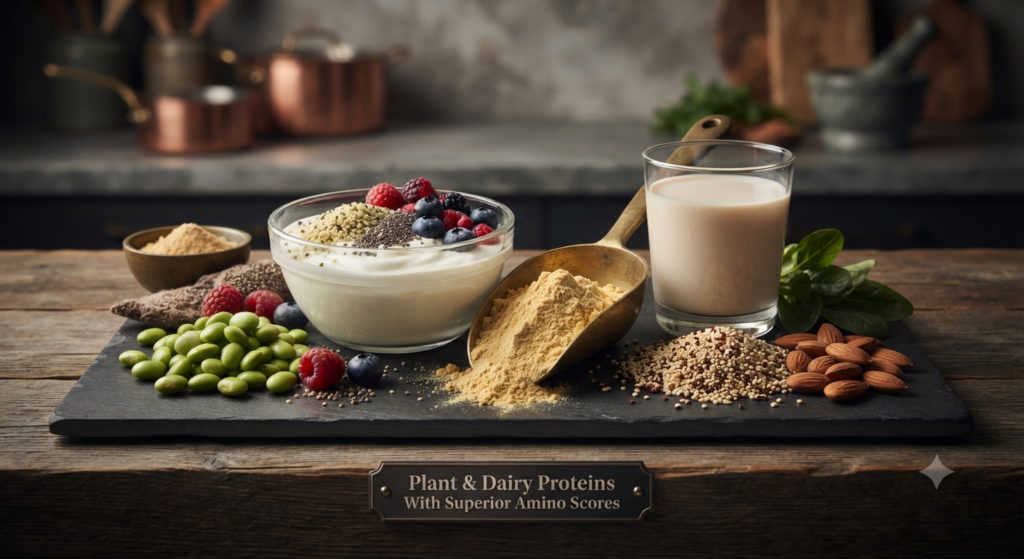
Plant & Dairy Proteins With Superior Amino Scores are reshaping how we meet protein needs. You can now find options beyond whey. Scores measure how well your body actually uses the protein. The right choice depends on your digestion speed needs.
How Amino Acid Scores Rank Plant & Dairy Proteins With Superior Amino Scores
DIAAS measures amino acid absorption at the small intestine. This method replaced older testing methods in recent years. Whey protein isolate and milk protein concentrate scored higher than pea and soy. The difference shows up in how fast muscles grab these amino acids.
Animal proteins typically score between 0.92 and 1.0 on the PDCAAS scale. Corn scores 0.41 and wheat hits 0.45. Lower numbers mean your body gets less usable protein per gram eaten.
Pork, casein, egg, and potato proteins average a DIAAS above 100. Whey and soy proteins classify as high quality with a DIAAS of 75 or greater. The gap narrows when you mix plant sources correctly.
Why Dairy Proteins Hit Peak Scores for Plant & Dairy Proteins With Superior Amino Scores
Whey protein contains 11 to 12 percent leucine versus casein’s 9 percent. Leucine jumpstarts the process by activating a signaling pathway within muscle cells. This amino acid matters more than others for muscle growth.
Casein has a higher amount of glutamine compared to whey. Glutamine keeps your immune system running during hard training blocks. Casein provides your body with a slow, steady release of amino acids. It works best before sleep or long gaps between meals.
Whey resulted in the highest plasma leucine concentrations. Your blood levels spike within an hour. Fast absorption means immediate fuel for recovery after you train. Whey will kickstart the muscle repair and rebuilding process.
Which Plant Sources Make the List of Plant & Dairy Proteins With Superior Amino Scores
Soy protein averaged a DIAAS of 84.5. Soymilk had the highest DIAAS among soy products. Processing changes the score more than most people realize. Heat treatment and isolation methods matter.
Soy is a high quality protein that contains all nine essential amino acids but is lower in methionine. Pea protein is relatively low in the essential amino acid methionine. Both need pairing with other foods. Neither stands alone as well as dairy proteins.
Pea protein has a higher concentration of lysine and leucine compared to soy. Pea protein is just as effective at promoting muscle synthesis as whey. The trick is eating enough to hit your leucine target.
Oat, rice, hemp, and fava bean proteins scored under 75 DIAAS. They fall into the no quality claim category. Use these as supporting players rather than main protein sources.
Blending Strategy for Plant & Dairy Proteins With Superior Amino Scores
A blend of 35 percent whey, 25 percent casein, 20 percent soy, and 20 percent pea was developed. This protein blend showed similar availability to casein and whey for total amino acids. Mixing balances the amino acid profile better than single sources.
Potato, soy, and pea proteins can complement a broad range of plant proteins. Potato and pea proteins are the most promising plant based complementary sources to achieve high quality blends. You need specific ratios to close the amino acid gaps.
Optimal plant blends could mimic whey or casein with a similarity reaching 92.4 and 98.0 percent respectively. The limiting constraints were mainly isoleucine, lysine, and histidine target contents. Three amino acids remain the hardest to match from plant sources alone.
Grains are low in lysine while legumes are low in methionine. When eaten within the same day these foods complement each other’s gaps. Your body pools amino acids throughout the day. You don’t need perfect proteins at every meal.
Timing Matters for Plant & Dairy Proteins With Superior Amino Scores
Whey protein is a faster source of amino acids than casein protein. The rate of appearance in the circulation was much higher for whey. Speed determines when you should eat each type. Match absorption rate to your activity window.
Morning protein sets your metabolism for the day and provides amino acids for building lean muscle tissue throughout waking hours. Post-workout protein within 30-60 minutes after exercise stops muscle protein breakdown (catabolism) immediately and triggers muscle protein synthesis when paired with resistance training. Evening protein, particularly slower-digesting casein or dairy proteins, sustains steady amino acid levels during sleep and supports overnight muscle recovery and growth hormone optimization. Each nutritional window demands different absorption speeds—fast whey for immediate post-workout recovery, slow casein for sustained nighttime release.
Whey protein lowers postprandial blood glucose by stimulating insulin. The branched chain amino acids abundant in whey may mediate the glucoregulatory effects. Protein timing affects blood sugar as much as muscle growth.
Whey has been shown to stimulate muscle protein synthesis more than equal amounts of casein in the first hours after exercise. When measured over four to six hours milk and casein elevate synthesis equally. The difference matters less over longer time frames.
Real World Application of Plant & Dairy Proteins With Superior Amino Scores
Athletes need 1.6 to 2.2 grams per kilogram body weight daily. A 70 kilogram person requires 112 to 154 grams. Twenty grams of soy protein isolate provides about 1350 milligrams of leucine. You need roughly 2000 to 3000 milligrams of leucine per meal for muscle growth.
Plant based foods show 70 to 90 percent digestibility. Animal proteins range from 85 to 100 percent. This gap means you must eat more plant protein to match animal sources. Add 10 to 20 percent extra when using plant proteins exclusively.
Budget dictates protein choices for many people. Whey isolate costs three to five dollars per pound. Pea protein runs two to four dollars. Whole food sources like lentils cost under one dollar. Price per gram of usable protein shifts the calculation.
Taste and texture stop people from sticking with protein plans. Whey mixes smooth and tastes neutral. Pea protein leaves a chalky feel. Soy brings a beany flavor. Try blends to hide individual protein weaknesses. Add cocoa powder or cinnamon to mask plant flavors.
Frequently Asked Questions
Can I build muscle using only plant proteins with lower amino scores?
Yes, you can build muscle with plant proteins alone. You need to eat more total protein to compensate. Mix different plant sources throughout the day.
Do amino acid scores change when I cook protein sources?
Cooking affects protein digestibility but not amino acid composition. High heat can damage some amino acids. Most home cooking temperatures work fine.
How long do amino acids stay in my system after eating?
Your body pools amino acids for 12 to 24 hours. You don’t need perfect proteins at each meal. Daily variety covers your needs.
Should I take amino acid supplements if using plant proteins?
Most people don’t need amino acid supplements with varied plant protein intake. Athletes may benefit from leucine supplements. Check your total daily protein first.
Why do some protein powders list amino scores on labels?
Amino scores help compare protein quality between products. Higher scores mean better amino acid profiles. Look for DIAAS over PDCAAS when available.
Start tracking your protein sources for one week to identify gaps in your amino acid intake.